
Sri Lanka is facing 'a very serious crisis' that makes India naturally worried, External Affairs Minister S Jaishankar told an all-party meeting in New Delhi on Tuesday and dismissed suggestions about such a situation arising in India.

India's economy continues to be robust, but downside risks such as rising crude oil prices, adverse weather conditions, and the global banking crisis outweigh the upside potential in gross domestic product (GDP) growth in the current financial year (FY24), the finance ministry said on Tuesday in its Monthly Economic Review for March. "We reiterate that downside risks to our official forecast of 6.5 per cent for real GDP growth in FY24 dominate upside risks," the review said. "Opec's surprise production cut has seen oil prices rise in April, off their lows of low-seventies per barrel in March.

Appealing with "folded hands" for an end to the three-month-long cycle of violence in Manipur, Home Minister Amit Shah on Wednesday urged the warring Kuki and Meitei communities to hold talks, even as the Lok Sabha adopted a resolution calling for the restoration of peace in the northeastern state.

'Banks will continue to increase FD rates to attract more deposits and meet the increasing demand for credit.'

'Limited spillovers' to Asia's third-largest economy, even as world 'perilously close' to recession.

These countries could face the "politically risky" prospect of food shortage unless there are major reforms in water management for agriculture in the region.

In May, Satpal Singh, who runs a dairy business with three buffaloes in Jewar, near Noida, was worried about the steep spike in input costs. Singh said dry fodder rates, which cost Rs 1,500-2000 per tractor trolley last year, were quoting at Rs 4,500-5,000. The price of other cattle feed ingredients (that include mustard meal and similar mixes) had also gone up from Rs 2,000 per quintal to Rs 3,100-3,200 per quintal.

The Indian FMCG industry has recorded a 9.4 per cent growth in the January-March quarter of 2021, helped by a consumption-led growth and value growth by increased prices of products, especially of staples, said data analytics firm Nielsen. The rural market continued to perform with strong growth of 14.6 per cent during the period and the metro markets have registered a positive growth after two quarters. Fast Moving Consumer Goods (FMCG) industry sales growth from the traditional trade channels jumped to double digits, while growth in e-commerce normalised down to single digits in the January-March quarter.
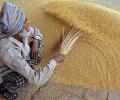
A head of its meeting, the Reserve Bank of India (RBI) can take some solace from the softening food commodity prices. However, the events surrounding the last few weeks show that the fall may not be uniform across all commodities, and cereals like wheat and rice could be the outliers. A Reuters report said that local wheat prices jumped to a record Rs 23,547 per tonne on Wednesday. That is a 12 per cent rise from the recent lows that followed the government's surprise ban on exports on May 14.

There is a significant amount of dispersion in the growth rates across different industries.

Sowing of crops at this point of time, when the onset of monsoon is delayed and chances of good rains are less, will only push up the cost for farmers and also hamper the yield of the crop: Skymet.

Stocks from the food processing sector and of companies trading in rice, dairy products, edible oils and food items outperformed markets by gaining 10-50 per cent.

Surplus rain water gushed out of reservoirs while several roads here resembled swollen rivers and four persons were killed in rain related incidents in Tamil Nadu and over 60 houses suffered damage, authorities here said on Monday.

'I'm pitching India for the strengths we offer, including the English language, engineers, doctors, nurses, professionals, innovative talent of startups.'

Readers share their favourite rainy day recipes with us. You can too!
Almost no legislative business was transacted making it the worst session of Parliament ever. Devika Malik lists the options out of the current impasse
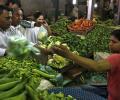
Retail inflation dropped marginally to 7.01 per cent in June mainly due to slight easing in prices of vegetables and pulses, though it still remained above the Reserve Bank's comfort level for the sixth month in a row. The consumer price index (CPI) based inflation stood at 7.04 per cent in the preceding month of May and 6.26 per cent in June 2021. Inflation in the food basket in June 2022 was 7.75 per cent, compared to 7.97 per cent in the previous month, as per the National Statistical Office (NSO) data released on Tuesday.

Indian consumers are likely to get respite from rising prices just before the festival season. Some consumer companies, including automakers, have indicated that they are planning to pause price hikes just before demand picks up in August, while keeping a close eye on volatile raw material prices.
.jpg)
After a string of extremely low and even negative monthly numbers, the industrial sector grew by 2.6 per cent year on year, far exceeding expectations.

Retail inflation slowed to 4.29 per cent in April from 5.52 per cent in March, mainly due to easing food prices, government data showed on Wednesday. The Reserve Bank mainly factors in the retail inflation based on Consumer Price Index (CPI) while arriving at its monetary policy. As per the data released by Ministry of Statistics and Programme Implementation, inflation in the food basket was 2.02 per cent in April, down from 4.87 per cent in the preceding month.

Analysts expect inflation to peak in the first half of 2016-17 and moderate, thereafter, on the back of positive impact of monsoons
Readers share their favourite rainy day recipes with us. You can too!
The monsoon situation in the northern region of the country will improve over the next couple of days and August will receive above average rainfall, Union Minister for Agriculture Sharad Pawar has assured.Quoting the latest report from the Indian Meteorological Department, Pawar told reporters in Hyderabad on Saturday that the states of Punjab, Haryana, western Uttar Pradesh and parts of Bihar and Himachal Pradesh will receive 86 per cent rainfall during July.

Discussion on the two bills could not take place as Opposition members continued to stage protests demanding a discussion on the Pegasus snooping allegations and the farmers' demand of repealing the three new agri laws.

Climate experts also warn the intensity of rains in Kerala and Uttarakhand is "alarming" and must draw immediate attention towards "climate emergency".

Despite near-term headwinds of rising input costs and the possibility of lower demand for products as Covid dented rural & urban India, and impacts both production & consumption, analysts remain bullish on stocks of fast moving consumer goods (FMCG) companies and expect the index to relatively outperform its peers in the second half of fiscal 2021-22 (FY22). In the past one year, prices of key commodities such as groundnut oil, mustard oil, Vanaspati, soya oil, sunflower oil and palm oil have shot up in the range of 20 per cent to 60 per cent, data show. The FMCG sector macros in this backdrop, according to analysts, have further deteriorated because of weakness in consumer demand and likely margin pressure due to elevated crude oil, palm oil and global food prices.

Flexibly targeting inflation is consistent with a demand stimulus, says Ashima Goyal.

In Tripura, the challenge for the chief minister is less from the alliance partners and more from his own party, the BJP.

The Reserve Bank of India on Friday raised the benchmark lending rate by 50 basis points to 5.40 per cent to tame inflation.
With a revival in demand and consumption, FMCG companies are looking forward to 2022 with positivity and hopes of sustaining a healthy growth trend across both rural and urban markets while gearing up to cater to the ever-increasing digitally active consumers and tackle the challenge of higher commodity prices. Health and wellness and convenience are going to remain key trends and FMCG companies are strengthening their core brands, driving premiumisation across their portfolios with targeted innovations as consumers are gravitating towards trusted brands looking for quality, purity and hygiene, in continuation of the trend that started since the pandemic last year. FMCG makers are accelerating digitalisation and are investing in building capability in e-commerce and Direct-to-Consumer channels, identifying it as a key vector of their growth as the threat of a possible third wave is still not away.

If El Nino condition affects the monsoons, as is being forecast by foreign agencies, it can slow down the economy to 5.2 per cent next fiscal from a projected 6 per cent.

This is the second time in a week that the Karnataka state capital is witnessing such severe waterlogging.

'Mumbai's corroding infrastructure, Delhi's pollution, Bangalore's rain water drainage, Kolkata's electricity -- these are all real and serious life threatening situations.'

For many farmers, though, a bumper harvest isn't good news, as they have been forced to sell their produce, particularly pulses, dirt cheap.

India's GDP expanded 13.5 per cent in the April-June quarter, the quickest pace in a year, to retain the world's fastest growing economy tag but rising interest costs and the looming threat of a recession in major world economies could slow the momentum in the coming quarters.

Sanjiv Mehta, chairman of the country's largest consumer goods company, HUL, believes that the second wave of the Covid-19 pandemic between April and June this year has been a mere pause in India's consumption story, and that it will not change the country's overall growth trajectory. India is poised for growth, especially in the fast-moving consumer goods (FMCG) sector, Mehta told shareholders at the company's annual general meeting on Tuesday. The signs of recovery are becoming evident with many states lifting lockdown restrictions in recent weeks.

With decline in number of fresh COVID-19 cases and easing of restrictions, the country's gross domestic product (GDP) will grow at 8.5 per cent in FY2021-22, according to credit rating agency Icra Ratings. It expects the gross value added (GVA) at basic prices (at constant 2011-12 prices) to grow at 7.3 per cent in FY2022. "The impact of the second wave of COVID-19 and the ensuing state-wise restrictions was seen across a variety of high frequency indicators in April-May 2021.
Readers share their favourite rainy day recipes with us. You can too!

As the growth figures relate to pre-Covid lockdown period it does not reflect the real picture of distress which unfolded from April onwards in the sector, when acute supply disruption led to sharp drop in prices of many commodities largely perishables impacting farmers.

As per commerce and industry ministry data, food inflation fell to 4.91 per cent in March from 7.79 per cent in the previous month.
